русский
 عربى
 中文简体


B12 Injection Needle Guide: Choosing Gauge, Length and Safety Features
Content
- 1 Why the needle matters more than the volume suggests
- 2 Intramuscular versus subcutaneous: a practical comparison
- 3 Reading a needle label without second-guessing
- 4 Matching the needle to the syringe
- 5 Safety features, sharps handling and site rotation
- 6 What to confirm before you order
- 7 A quick pre-injection checklist
A B12 injection carries a very small volume of solution, often half a millilitre or less, yet the needle that delivers it decides how comfortable the injection feels, how reliably the dose reaches the right tissue, and how much aftercare the patient needs. We have spent years manufacturing hypodermic needles, syringes and related consumables in Taixing, Jiangsu, and the questions we hear most often from clinics, distributors and private-label partners are rarely about the vitamin itself. They are about gauge, length, bevel and whether the needle on the shelf is actually the one the protocol calls for.
This guide walks through how a B12 injection needle is usually specified, where intramuscular and subcutaneous choices diverge, and which details are worth confirming before a purchase order is signed. It is written for buyers, clinicians and product managers rather than as medical advice; the final decision on any individual injection always belongs to the prescribing clinician.
Why the needle matters more than the volume suggests
Vitamin B12 preparations such as cyanocobalamin and hydroxocobalamin are typically given as a small aqueous dose into muscle or into subcutaneous fat. Because the volume is small, the needle does almost all of the mechanical work: it opens the tract, controls depth, and determines whether the solution stays where it was placed.
A needle that is too short for the chosen site can leave the dose in fatty tissue when muscle was intended, which changes absorption behaviour and may increase local irritation. A needle that is longer or heavier than necessary increases the chance of bruising, bleeding and patient discomfort. The goal is not simply "a sharp needle" but a needle whose length, gauge and point geometry match the route, the site and the body habitus of the person receiving the injection.
Intramuscular versus subcutaneous: a practical comparison
Most B12 protocols fall into one of two routes. Intramuscular injections are commonly placed in the ventrogluteal or dorsogluteal area, or in the vastus lateralis, and need enough length to pass through the subcutaneous layer. Subcutaneous injections are usually given into the abdomen, thigh or upper arm with a much shorter needle, often at a 45 to 90 degree angle depending on tissue thickness.
| Route | Common site | Typical length | Typical gauge | Practical note |
|---|---|---|---|---|
| Intramuscular | Ventrogluteal, dorsogluteal | 25-40 mm (1-1.5 in) | 21-25 G | Needs to clear subcutaneous fat reliably |
| Intramuscular | Deltoid | 16-25 mm (5/8-1 in) | 23-25 G | Shorter needle suits lean deltoid tissue |
| Subcutaneous | Abdomen, thigh, upper arm | 10-16 mm (3/8-5/8 in) | 25-27 G | Pinch skin fold; shallow angle for thin tissue |
| Subcutaneous | Abdomen, thigh | 8-13 mm (5/16-1/2 in) | 30-32 G | Often delivered with an insulin-type syringe |
These ranges overlap on purpose. A lean patient receiving a gluteal injection and a patient with more subcutaneous tissue at the same site may need different lengths, and clinics that treat a broad population often stock two or three lengths rather than one. That is one reason a mixed order of 23 G and 25 G needles in two lengths is so common in practice.
Where a facility standardises on a single hypodermic needle line for injection, drawing and general ward use, a sterile single-use needle with a clean three-facet bevel and consistent silicone lubrication covers most B12 protocols without adding complexity to stock control. Our
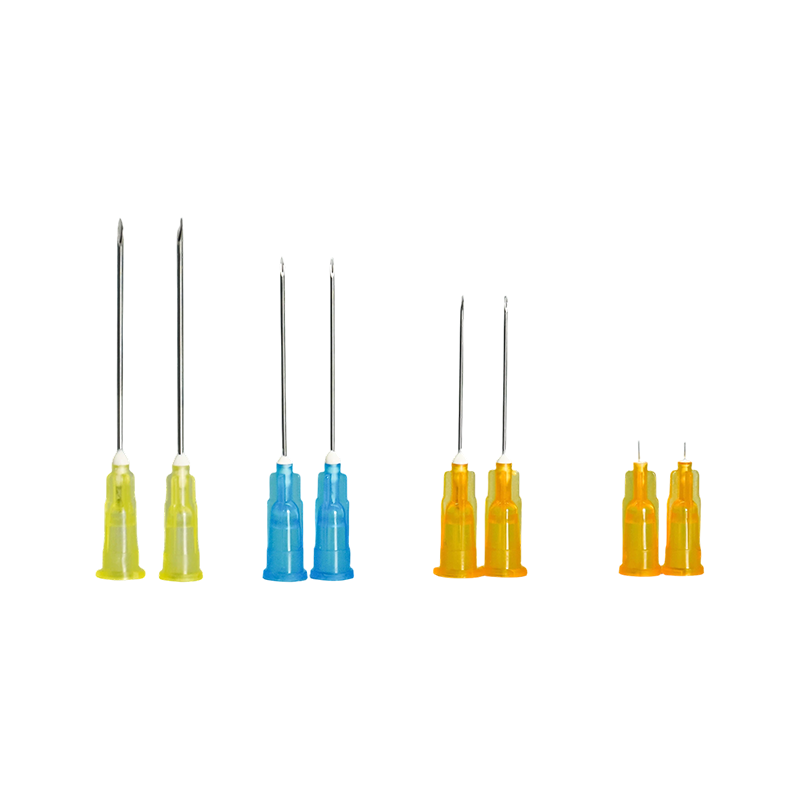 Sterile Single-Use Hypodermic NeedleA routine sterile needle for subcutaneous and intramuscular B12 injections, available in multiple gauges and lengths with individual sterile packaging.View Product →
sits in that everyday category.
Reading a needle label without second-guessing
Needle specifications are compact, and small misreadings cause big purchasing errors. Four numbers and one word carry most of the information.
- Gauge (G): a higher number means a finer needle. Gauge rises as the outer diameter falls, so 30 G is thinner than 21 G. Finer needles reduce discomfort but can slow the draw-up of viscous solutions.
- Length: usually printed in millimetres and inches, measured from hub to tip. Length, not gauge, governs whether the dose reaches muscle.
- Bevel: a standard three-facet bevel suits most injections; short or intradermal bevels are for other purposes and should not be substituted casually.
- Wall type: thin-wall and ultra-thin-wall needles offer a wider inner lumen for the same outer diameter, which helps with draw-up speed and flow.
- Dead space: the residual volume left in the hub and needle after injection. Low-dead-space designs matter more for small or expensive doses.
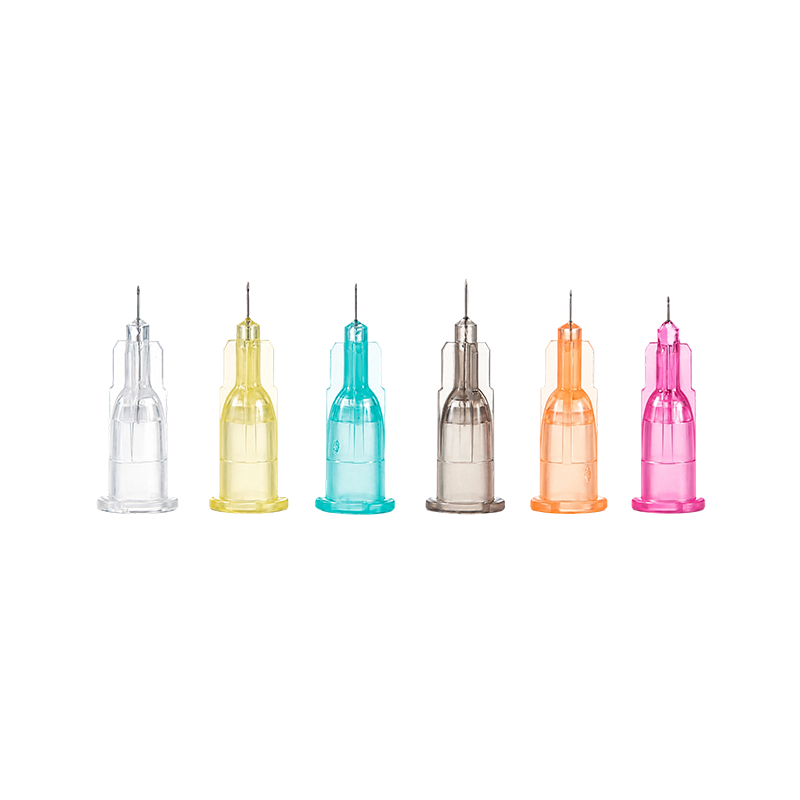
Hub colour coding is convenient but not universal. Two suppliers can use different colours for the same gauge, so always confirm the printed specification rather than matching by cap colour alone, particularly when switching manufacturers or running parallel stock.
Matching the needle to the syringe
The connection type is easy to overlook and expensive to get wrong. Luer lock needles twist and lock onto the syringe, which is the safer choice for deeper intramuscular work and for any solution that must not leak at the hub. Luer slip needles push on and rely on friction, which suits quick subcutaneous injections where speed matters.
Integrated insulin-type syringes take a different approach: needle and barrel are one sterile unit, graduations are printed in units, and the fixed needle is extremely fine. They are popular for subcutaneous B12 because they are compact and generate little waste, but the unit scale is a genuine safety consideration. A dose written in millilitres must be converted carefully, and clinics that use both insulin syringes and standard syringes should keep the two workflows visibly separate.
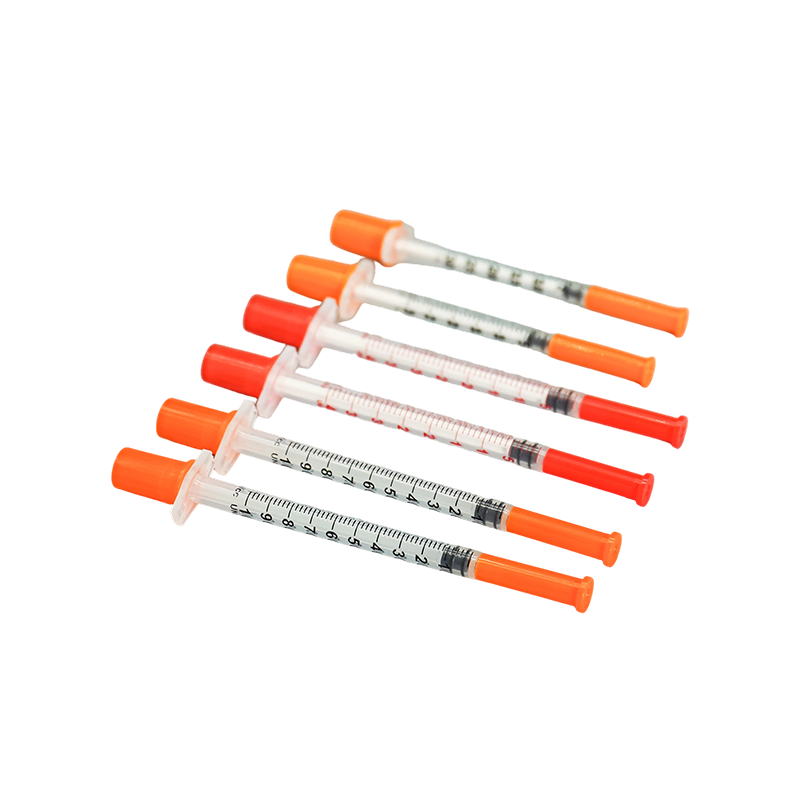 Disposable Insulin Syringe with Fixed NeedleA compact fixed-needle syringe with 40 IU and 100 IU graduations in 0.3–1 ml capacities for small-volume B12 or insulin injection workflows.View Product →
For partners building a B12 or vitamin injection kit, the practical answer is usually a matched set: needle, syringe and, where required, a safety mechanism that has been validated together rather than assembled from unrelated components.
Safety features, sharps handling and site rotation
Needlestick injuries remain one of the most common occupational exposures in injection practice, and a B12 injection is no exception. Safety-engineered needles with a shielding or retracting mechanism reduce the risk, but only if staff are trained on that specific device and the mechanism is activated immediately after use rather than carried across the room.
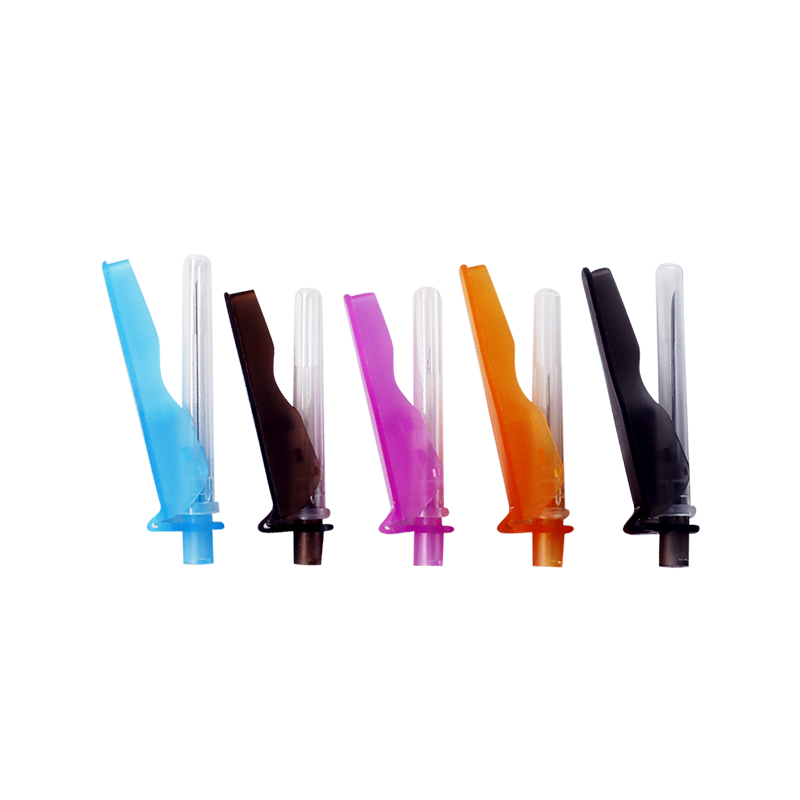 Single-Use Safety Needle with Integrated ShieldA sterile injection and blood collection needle with an integrated safety mechanism that shields the tip after use to reduce needlestick exposure.View Product →
Beyond the device itself, three habits matter as much as the specification sheet: never recap by hand, place the used needle directly into a puncture-resistant sharps container at the point of use, and rotate injection sites so that repeated doses do not concentrate trauma in one area. Single-use means single-use, including on the same patient, because a dulled bevel increases pain and tissue damage even when sterility is not in question.
What to confirm before you order
Needle quality is largely invisible until something goes wrong, so the purchasing conversation should focus on documentation and consistency rather than price per unit alone. Batch-to-batch consistency in bevel grinding, cannula straightness and lubrication affects how the product behaves in the hand, and those characteristics are governed by process control, not by inspection at the end of the line.
For suppliers serving regulated markets, ask for the quality management system scope, applicable certifications, and the specific product listings or clearances that cover the items on your order. At our own facility we work within an ISO 13485 quality management system, hold EU MDR certification for applicable product lines including hypodermic needles, and maintain FDA establishment registration and device listing for the U.S. market, with 510(k) clearance for specified sterile syringe and hypodermic needle products. All of that is only meaningful when read against the exact product and market in question, which is why the scope statement matters as much as the certificate.
Also confirm packaging format, sterile barrier integrity, lot traceability, shelf life and whether private-label or OEM/ODM support is available for your own artwork and configuration. Buyers comparing several suppliers may find our overview of how to choose a reliable medical consumables supplier a useful checklist companion, and clinical and ward buyers can review the broader medical solutions range for matched consumables.
A quick pre-injection checklist
- Confirm the prescribed route, dose and site, and check that the needle length matches the tissue depth at that site.
- Check the sterile barrier is intact and the product is within its expiry date.
- Verify the needle is the intended gauge and that the hub connection matches the syringe type.
- Draw up with a suitable drawing needle where protocol requires, then swap to the injection needle.
- Prepare the sharps container within reach before the needle is uncapped.
- Dispose of the needle immediately after use, without recapping.
- Record the site used so that rotation can be tracked across subsequent doses.
A B12 injection needle is a small, low-cost component with an outsized effect on patient experience and clinical consistency. Getting it right comes down to a short list of decisions: route, depth, gauge, connection type and safety mechanism, backed by documentation that stands up to audit. Once those are settled, the rest of the supply conversation becomes considerably simpler.
If you are evaluating needle and syringe configurations for vitamin injection programmes, private label ranges or clinic stock, our team is glad to talk through the specifications rather than simply quote a catalogue number.
Related Product
Related NEWS