


 русский
  عربى
عربى  中文简体
中文简体


Industry Knowledge
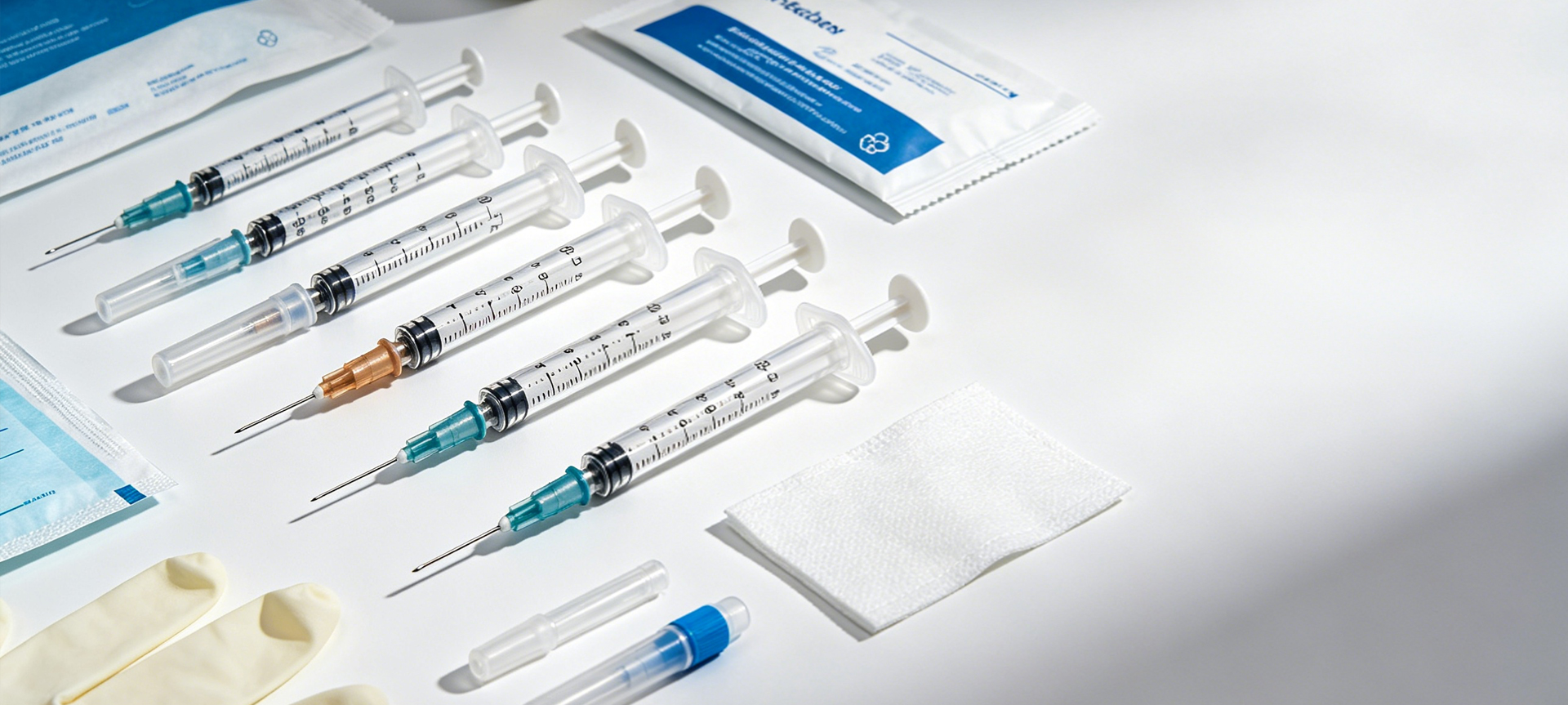
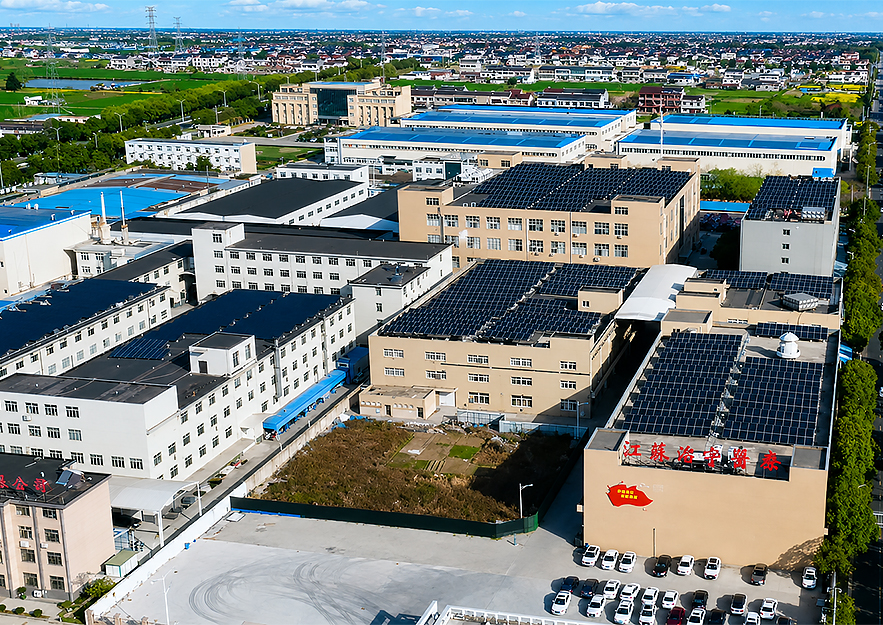
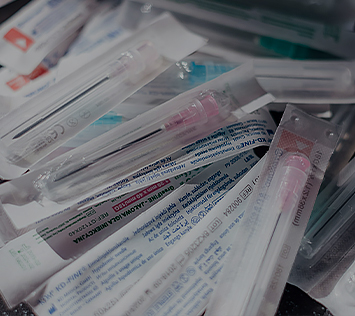
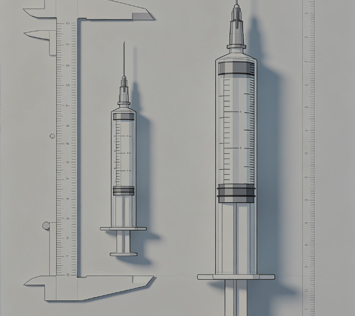
Jiangsu Zhiyu Medical Instrument Co., Ltd. manufactures disposable syringes and related single-use consumables at our Taixing, Jiangsu production base. Our Disposable Syringes range covers standard sterile syringes, auto-disable syringes, safety syringes, oral and feeding syringes, and irrigation syringes, supplied to hospitals, clinics, nursing facilities, distributors, public-health programmes and OEM/ODM brand owners.
We build the range around one commercial reality: a syringe order is rarely a single model. Immunisation programmes need reuse-prevention devices, wards need general-purpose sterile syringes, geriatric and paediatric care need oral dosing accuracy, and nursing support needs flushing volumes. We hold these product families under one manufacturing and quality system so a mixed configuration can be produced, packed and shipped as one project.
Our Disposable Syringe Range and Where Each Type Fits
Each product family in this category answers a different clinical or programme requirement. The table below sets out the models we supply, their typical application, and the configuration variables that shape the finished item.
| Product Type | Primary Application | Key Configuration Variables |
|---|---|---|
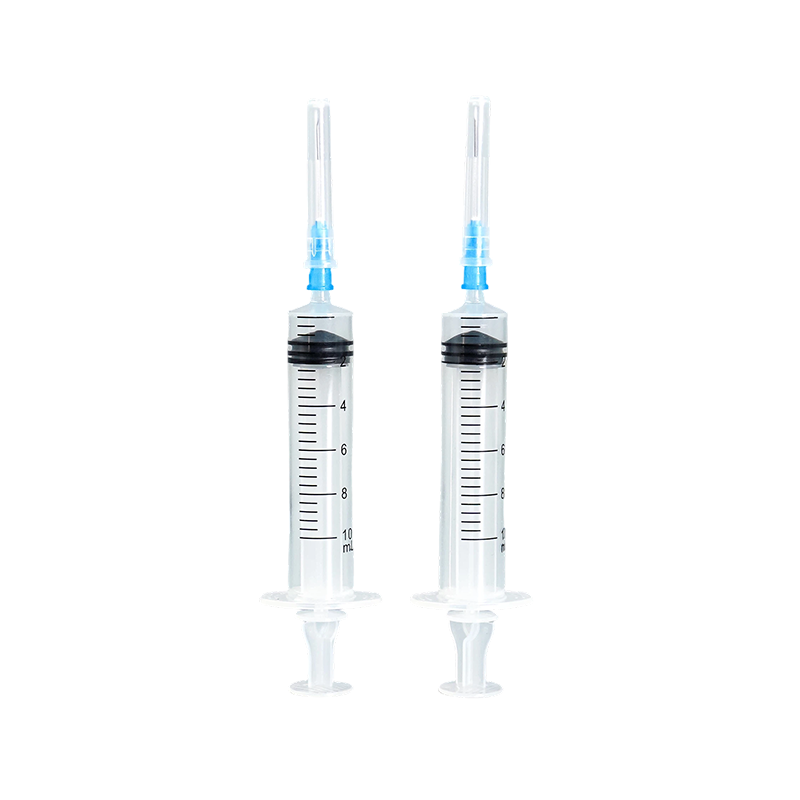
| Sterile Syringe for Single Use (with Needle) | Routine aspiration, drug preparation, general injection | Volume, Luer Slip or Luer Lock, needle gauge and length, packaging format |
| Sterile Auto-Disable Syringe (with Needle) | Immunisation and public-health injection programmes | Fixed-dose volumes, plunger lock mechanism, needle fixation, bulk programme packaging |
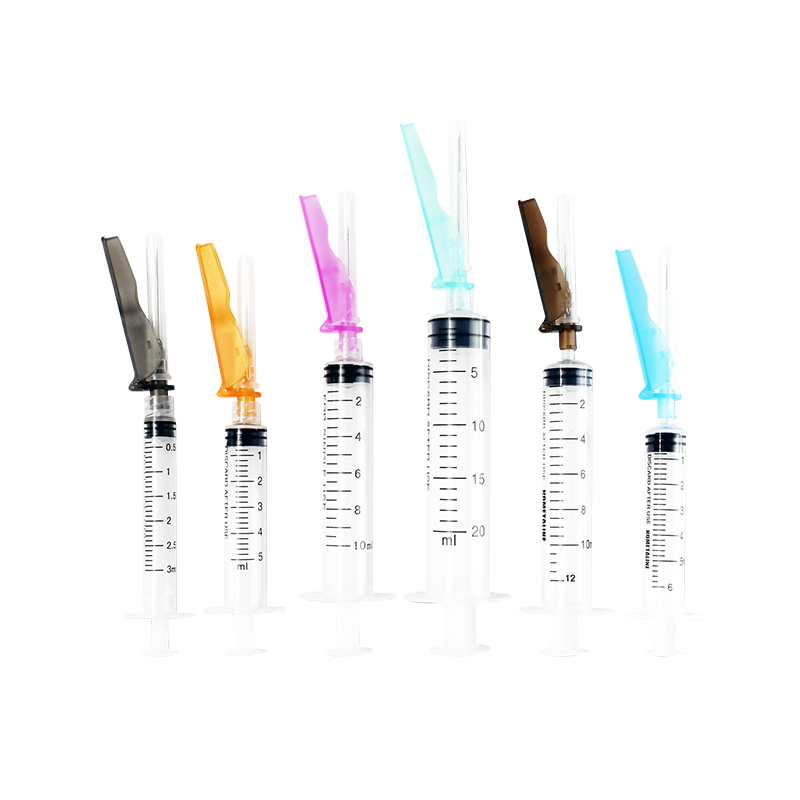
| Disposable Safety Syringe for Single Use | Needlestick and occupational exposure protection | Shielding or retracting mechanism, permanently attached needle, activation force |
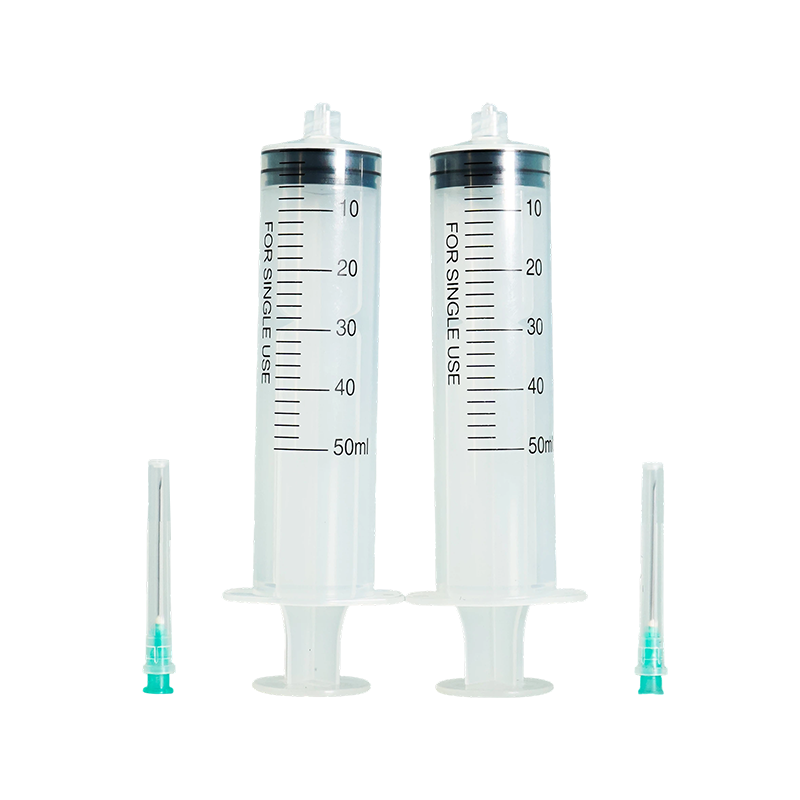
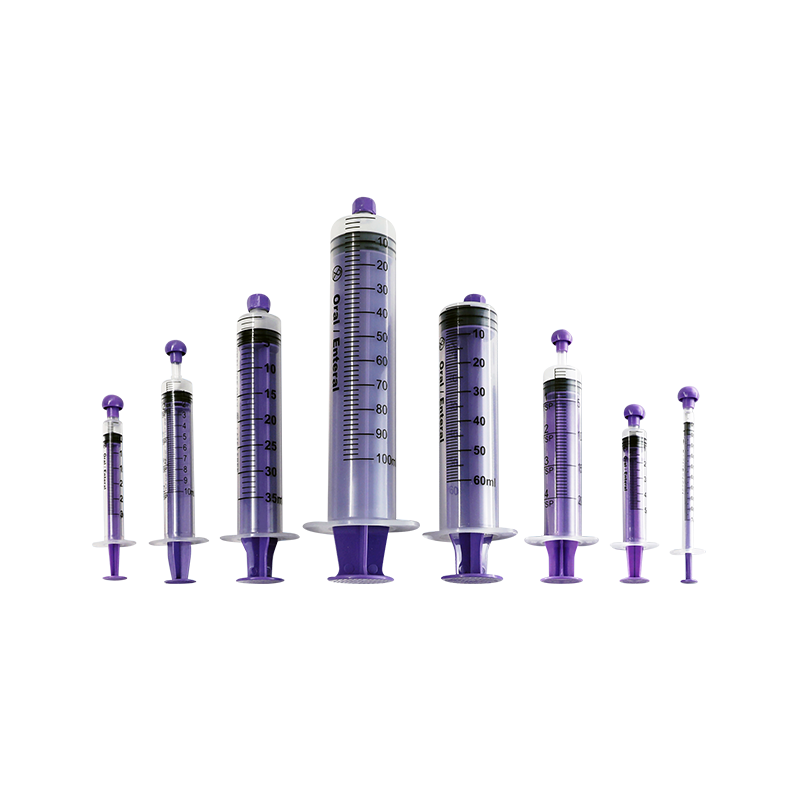
| Oral Syringe (Feeding Syringe) | Liquid medication, enteral feeding, paediatric and elderly care | 1–50 mL volumes, tip geometry, scale graduation clarity, non-Luer tip |
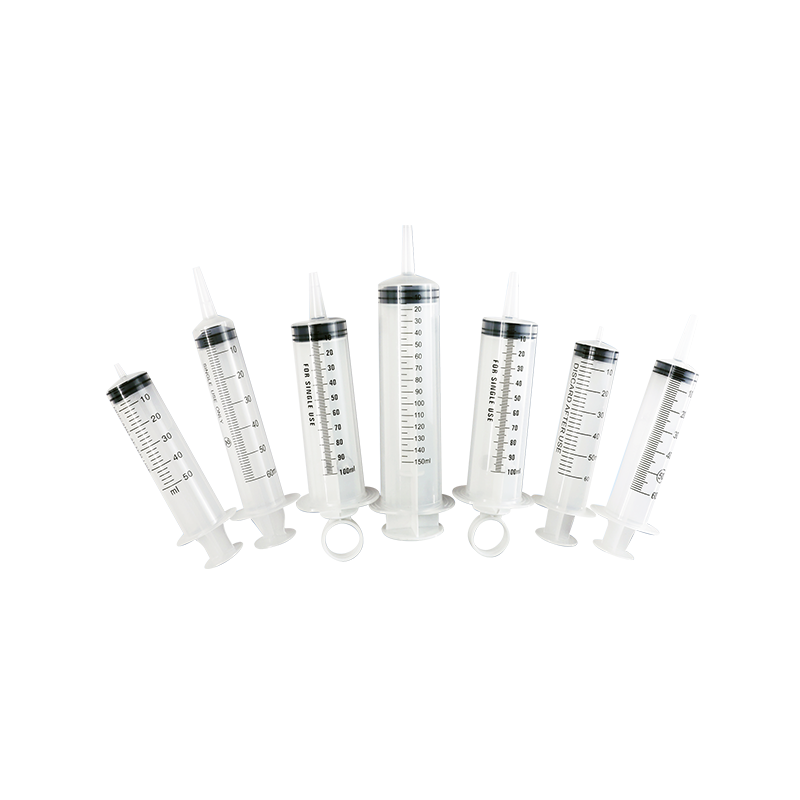
| Irrigation Syringe | Wound and cavity flushing, nursing assistance | Large barrel volumes, tip aperture, plunger travel, sterile pack format |
Adjacent product lines are produced under the same quality system where a project needs a combined consumables basket: Insulin Syringes for fixed-dose subcutaneous delivery, and Medical Needles & IV Products where hypodermic or butterfly needles are specified alongside syringes.
Volume, Interface and Needle Configuration
Syringe specification is driven by the delivered dose, the connection method the end user expects, and whether the needle is supplied fitted or separately. We confirm these three variables before any tooling or packaging decision is taken.
- Standard volumes: 5 mL, 10 mL, 20 mL and 30 mL for general clinical use; oral and feeding formats extend across 1 mL, 3 mL, 5 mL, 10 mL, 20 mL, 30 mL and 50 mL.
- Interface: Luer Slip for push-fit familiarity and fast handling; Luer Lock where a secure threaded connection is required for aspiration, transfer or higher-pressure work.
- Needle configuration: fixed needle, separate needle, or needle-free barrel for customers who pair the syringe with their own needle stock.
- Graduation: printed scale contrast and graduation interval are matched to the reading accuracy the application demands, particularly for oral dosing where spoon or cup measurement is not adequate.
- Safety and reuse prevention: auto-disable plunger mechanisms and shielding or retracting safety designs are separate structural families, not cosmetic variants of the standard barrel.
Materials, Cleanroom Production and Sterilisation
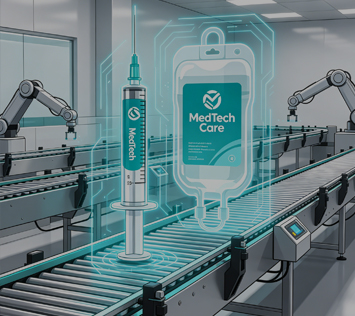
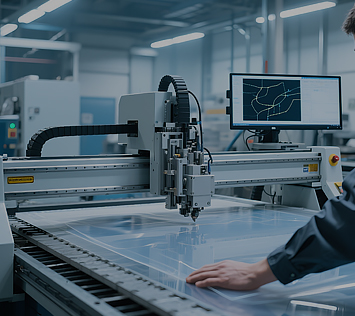
Our syringe lines run on a collaborative production system covering injection moulding, assembly, testing and packaging, supported by a 12,000 m² purification room and 160+ production equipment units across the site. Medical-grade polymer raw materials are used for barrel, plunger and cap components, with elastomeric gaskets selected for seal integrity and plunger glide.
Sterile single-use products are produced under controlled cleanroom conditions and sterilised with ethylene oxide, with quality inspection before shipment. Batch production is managed so that output remains consistent across repeat orders rather than varying between runs.
Quality Control and Regulatory Documentation
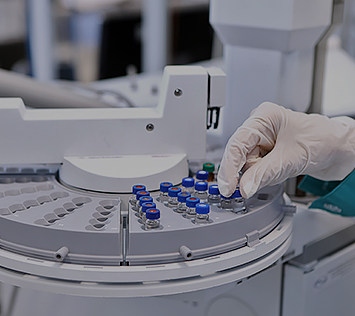
Quality control runs from incoming material inspection through in-process inspection to final product inspection, with an in-house laboratory and testing centre. Inspection records, quality reports and testing documentation are archived systematically, and retained samples are preserved through shelf life plus an additional two years. For applicable products, automatic vision inspection and online monitoring at key production stages strengthen consistency management.
Documentation available for applicable product lines and scopes includes:
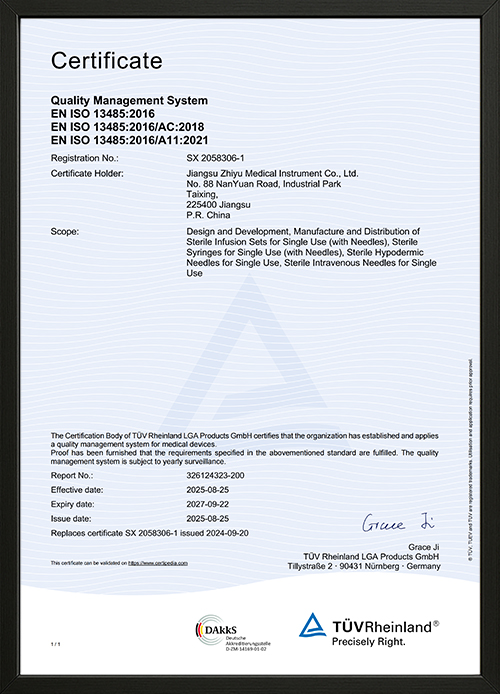
- ISO 13485:2016 certificate
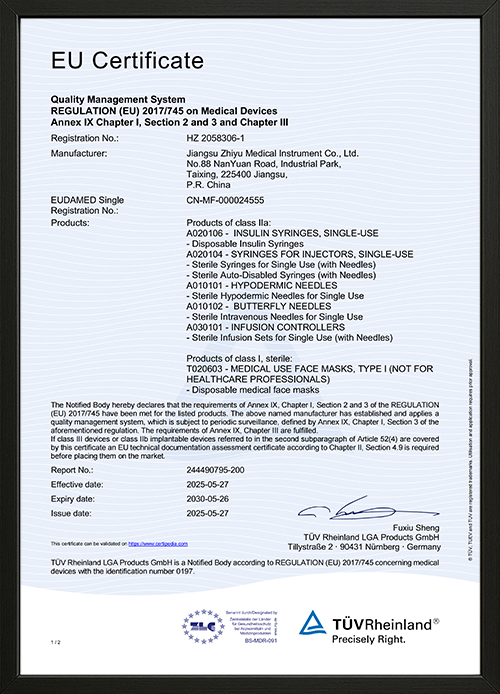
- EU MDR certificate under Regulation (EU) 2017/745
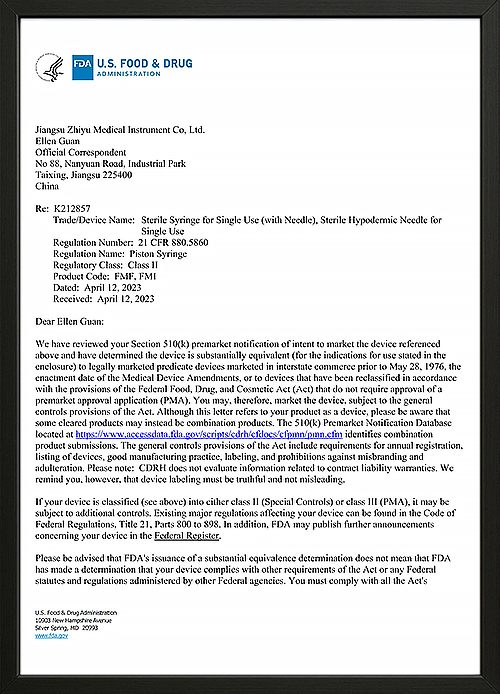
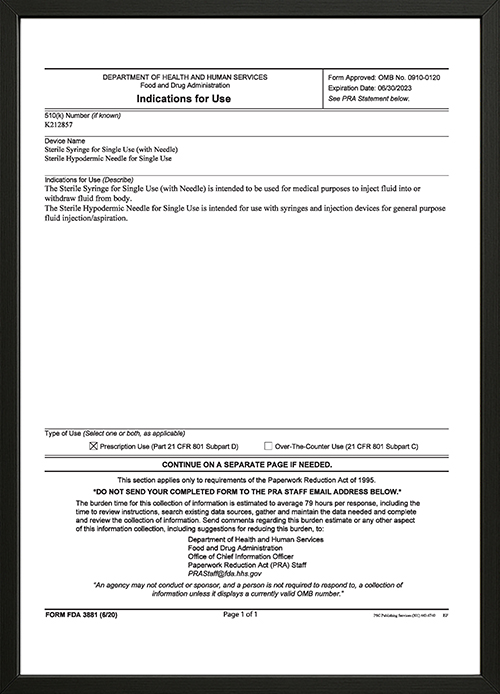
- FDA 510(k) clearance letter K212857 and indications for use
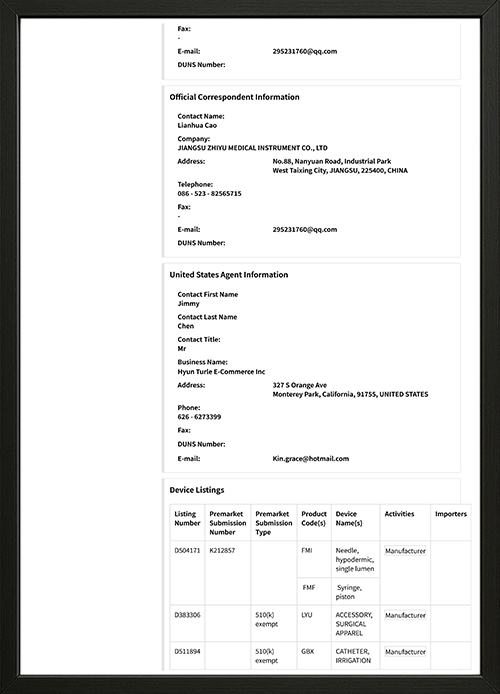
- FDA facility registration and device listing
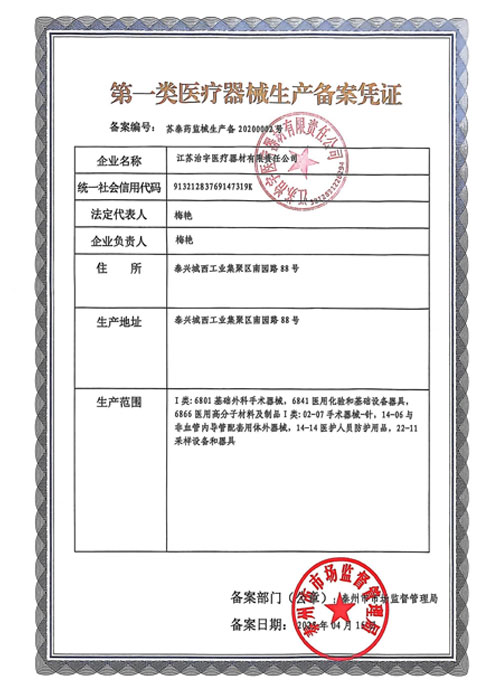
- First Class Medical Device Production Filing Certificate
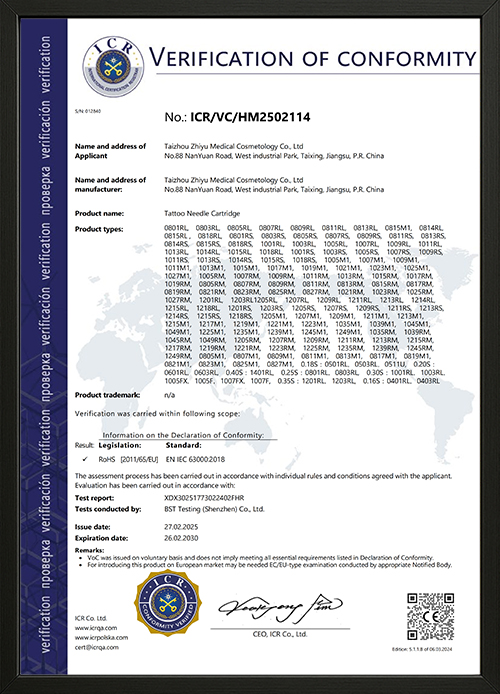
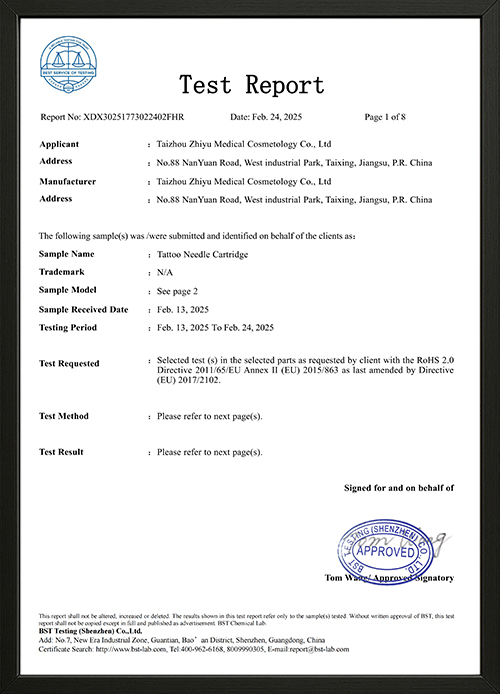
- RoHS verification and RoHS 2.0 test report
Regulatory scope differs by product line. Auto-disable, safety and standard sterile syringes do not share identical market clearances, so the applicable documents are confirmed against the specific model and destination market during project evaluation.
OEM, ODM and Packaging Development
Beyond standard supply, we support OEM and ODM cooperation across the syringe range. Packaging adaptation covers neutral packaging, colour box, blister and PE bag formats, private-label labelling and multilingual label design. Specification extension allows a distributor to build a coherent catalogue across volumes and interface types rather than sourcing each size separately.
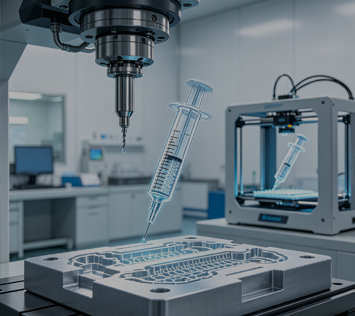
For projects with defined requirements, we can evaluate mould development, structural optimisation and customised product development around injection-moulded components and needle-related parts. Project-based coordination carries a requirement from sampling and validation through to volume production, which suits brand owners introducing a differentiated syringe or a proprietary safety design.
Information We Use to Configure Your Solution
A syringe quotation is only accurate when the working configuration is fixed. The following inputs let us match model, tooling and packaging without a second round of clarification.
| Project Input | Why We Need It |
|---|---|
| Product type and volume | Determines barrel mould, graduation and plunger specification |
| Interface and needle requirement | Sets Luer type, needle gauge and length, or needle-free configuration |
| Target market and registration route | Identifies which regulatory documents apply to the model |
| Packaging format and private-label needs | Drives pack design, label artwork and carton configuration |
| Estimated order quantity and delivery pattern | Supports production scheduling and repeat-order continuity |
| Drawings, photos or reference samples | Shortens evaluation for customised or structural projects |
Sampling, Acceptance and Order Documentation
For standard products, samples can usually be arranged from existing specifications. For customised projects, we confirm the application scenario, specification requirements, packaging method and target market first so that the trial sample reflects the intended production configuration. Sample freight is normally borne by the customer.
Acceptance is supported by inspection records, quality reports and testing documentation covering incoming, in-process and final inspection stages. Retained samples remain available for reference through shelf life and beyond, which gives distributors and tender reviewers a traceable basis for batch verification.
Supply, Lead Time and Long-Term Cooperation
Annual syringe production exceeds 1 billion units, supported by 160+ production equipment units and a 32,000 m² site area. That capacity configuration is what allows us to support large-scale orders, continuous supply and long-term cooperation rather than one-off shipments.
Lead time depends on payment timing, product type, order quantity, specification complexity, packaging requirements and whether customisation is involved, so it is handled case by case. Standard products are normally scheduled after order confirmation and related arrangements are settled; projects involving mould development, structural changes or proprietary packaging require additional time. Confirming key specifications and packaging early allows production planning to be arranged more accurately.
Frequently Asked Questions
Are you a disposable syringe manufacturer or a trading company?
We are a manufacturing-oriented company. Jiangsu Zhiyu Medical Instrument Co., Ltd. was established in 2005 in Taixing, Jiangsu, China, and produces disposable medical consumables including disposable syringes, insulin syringes, auto-disable syringes, hypodermic needles, butterfly needles and infusion sets, with OEM/ODM support across these lines.
Which syringe types can be ordered in one project?
Standard sterile syringes, auto-disable syringes, safety syringes, oral and feeding syringes, and irrigation syringes can be combined in a single configuration, with needle-fitted or needle-free options and Luer Slip or Luer Lock interfaces as required.
Do all syringe models carry FDA or CE documentation?
No. Regulatory scope differs by product line. ISO 13485, EU MDR, FDA 510(k) K212857 and FDA establishment registration apply to specified products and activities, so the applicable documents are confirmed against the exact model and target market before a project proceeds.
Can you produce syringes under our own brand and packaging?
Yes. We support private-label labelling, colour box, blister and PE bag packaging, multilingual label design, and packaging development. For projects with defined requirements we can also evaluate mould development, structural optimisation and customised product development.
What information do you need for an accurate quotation?
Product name, volume, needle type or gauge, with or without needle, packaging requirements, target market, estimated order quantity, whether OEM or private label is needed, and any drawings, photos or reference samples. For customised projects, early clarification of the application scenario and key technical requirements improves the development and production evaluation.
How is quality controlled across batch production?
Incoming material inspection, in-process inspection and final product inspection are carried out under a structured workflow, supported by an in-house laboratory and testing centre, automatic vision inspection and online monitoring at key stages. Inspection records and quality reports are archived, and retained samples are kept through shelf life plus two years.