русский
  عربى
عربى  中文简体
中文简体


What Does .5 Mean on an Insulin Syringe? A Clear Guide to 0.5 mL Doses
Content
- 1 What the .5 Mark Represents on an Insulin Syringe
- 2 How to Read 0.5 mL on a U-100 Syringe
- 3 When .5 Means Half a Unit, Not Half a Milliliter
- 4 Choosing the Right Syringe Size and Needle
- 5 Practical Steps for Drawing an Accurate 0.5 mL Dose
- 6 Quality and Supply Considerations for Insulin Syringes
- 7 Key Takeaways
Insulin syringes come in several barrel sizes, and the numbers printed on them can create confusion. When someone asks about “.5 on an insulin syringe,” they may mean the 0.5 mL mark, which is halfway up a 0.5 mL barrel, or they may mean a half-unit dose. The distinction matters because 0.5 mL and 0.5 unit are not the same measurement. At ZY Medical, we have manufactured disposable insulin syringes since 2005, and we see this question often from clinicians, caregivers, and people managing diabetes at home. This guide explains what the .5 mark means, how to read it on common U-100 syringes, and how to avoid measurement mistakes.
What the .5 Mark Represents on an Insulin Syringe
Most insulin syringes today are U-100, meaning 1 mL of liquid contains 100 units of insulin. On that scale, each 0.1 mL equals 10 units. So a 0.5 mL mark represents 50 units. The same physical mark on a U-50 syringe represents 25 units, and on a U-40 syringe it represents 20 units. This is why the concentration printed on the package must be checked before interpreting any mark on the barrel.
A 0.5 mL syringe is often chosen for doses between 30 and 50 units because the scale is easier to read than on a 1 mL barrel. Some 0.3 mL syringes include half-unit markings, which are useful for doses such as 0.5 unit. However, without half-unit markings, a 0.5 unit dose cannot be measured accurately. Always confirm the scale before drawing.
| Barrel size | U-100 units at full barrel | Units at the 0.5 mL mark | Typical use |
|---|---|---|---|
| 0.3 mL | 30 units | Not applicable | Low doses, half-unit scales available |
| 0.5 mL | 50 units | 50 units | Most common for 30-50 unit doses |
| 1.0 mL | 100 units | 50 units | Larger doses above 50 units |
How to Read 0.5 mL on a U-100 Syringe
On a U-100 0.5 mL syringe, the barrel is marked from 0 to 50 units. The 0.5 mL point is exactly 50 units, which is the full barrel. If the prescription says 0.5 mL, draw to the 50-unit mark. If the prescription says 50 units, the same mark applies. This overlap is helpful, but it is also where errors can happen. Never assume that .5 always means 50 units. On a U-50 syringe, the full 0.5 mL barrel is 25 units, and on a U-40 syringe it is 20 units.
- Check the concentration: U-100, U-50, or U-40.
- Check the barrel size: 0.3 mL, 0.5 mL, or 1.0 mL.
- Check the unit scale: whole units or half units.
- Check the prescription: mL, units, or both.
A common mistake is reading the plunger edge instead of the top of the black stopper. The dose is measured at the point where the top ring of the plunger meets the scale. Also account for dead space in the needle hub. Priming the needle with a small air purge or insulin drop helps ensure the full dose enters the tissue.
When .5 Means Half a Unit, Not Half a Milliliter
Half-unit syringes are designed for people who need very small doses, such as children, people with high insulin sensitivity, or those transitioning from diluted insulin. These syringes typically have a 0.3 mL barrel and markings at every 0.5 unit. On such a syringe, the .5 mark means half a unit, not 0.5 mL. This is a completely different scale from a standard 0.5 mL syringe.
If you are prescribed 0.5 unit, a standard U-100 syringe with 1-unit markings will not allow an accurate measurement. You need a dedicated half-unit syringe. If you are prescribed 0.5 mL, a half-unit syringe may be too small because a 0.3 mL barrel cannot hold 0.5 mL. Matching the syringe to the dose is essential for safety and accuracy.
Choosing the Right Syringe Size and Needle
Needle choice affects comfort and delivery. Shorter, thinner needles are generally preferred for subcutaneous insulin injections because they reduce pain and the risk of intramuscular injection. However, the right choice depends on body composition, injection site, and clinician guidance.
| Needle gauge | Needle length | Common use |
|---|---|---|
| 29G | 12.7 mm, 1/2 inch | Deeper subcutaneous injections, often selected by clinicians |
| 30G | 8 mm, 5/16 inch | General adult subcutaneous injections |
| 31G | 6 mm, 15/64 inch | Thinner, shorter needle for comfort and low-dose accuracy |
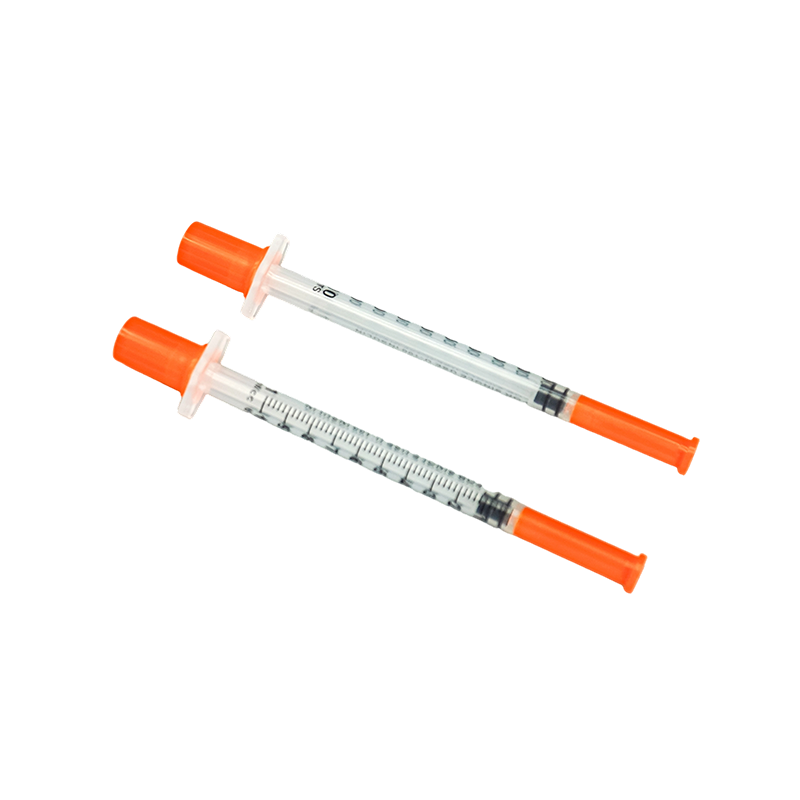
For example, our disposable insulin syringe line includes 0.3 mL, 0.5 mL, and 1.0 mL barrels with clear unit markings and fixed needles in commonly requested gauges. The goal is simple: make the correct dose easy to see and easy to draw.
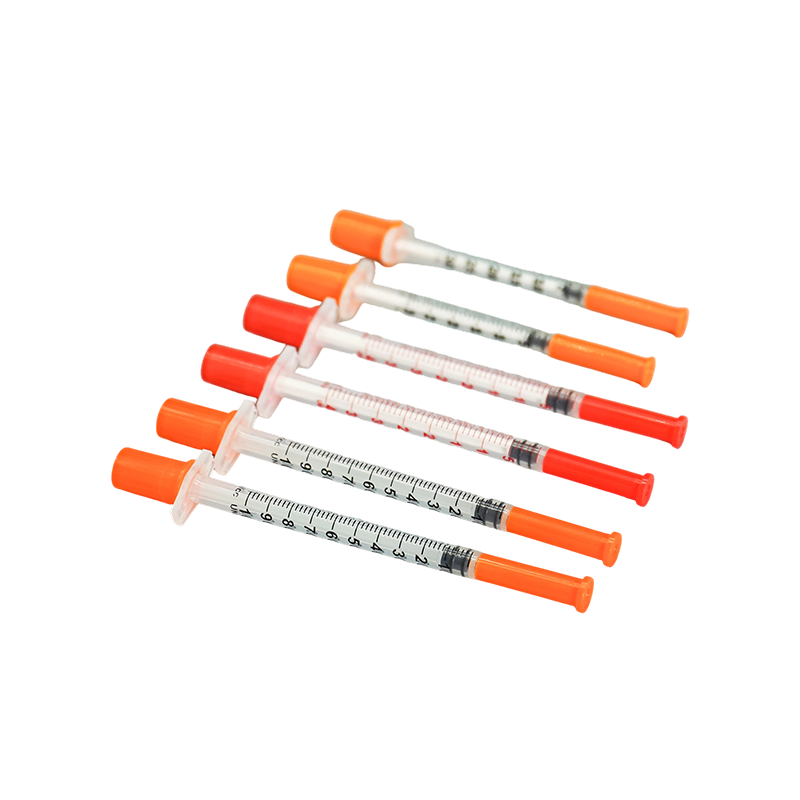 Disposable Insulin Syringe with Clear Unit MarkingsAvailable in 0.3, 0.5, and 1 ml capacities with fixed needles and 40 IU or 100 IU graduations, helping users draw and verify small insulin doses accurately.View Product →
Practical Steps for Drawing an Accurate 0.5 mL Dose
- Wash hands and gather supplies.
- Check the syringe packaging, concentration, expiry date, and insulin type.
- Gently roll or invert the insulin vial as directed; do not shake it.
- Clean the vial stopper with alcohol and let it dry.
- Draw air into the syringe equal to the dose, inject air into the vial, then invert the vial.
- Withdraw slightly more than the dose, then remove bubbles by tapping and pushing the plunger.
- Push excess insulin back into the vial until the top of the plunger aligns with the correct mark.
- Check the dose again, then inject at the recommended site and rotate sites.
These steps sound simple, but small errors add up. A 0.5 mL dose is 50 units on a U-100 syringe, so even a one-unit misread is a 2 percent error. For people with low insulin requirements, that can matter. Taking an extra moment to verify the mark protects the person receiving insulin and supports better day-to-day control.
Quality and Supply Considerations for Insulin Syringes
As a manufacturer, ZY Medical focuses on consistency, sterility, and clear markings. Our insulin syringes and related medical consumables are produced under a medical device quality management system. Current documentation includes ISO 13485 certification for applicable medical-device activities, EU MDR quality management system certification covering insulin syringes, disposable syringes, auto-disable syringes, hypodermic needles, butterfly needles, and infusion sets, as well as FDA establishment registration and device listing for the U.S. market. FDA 510(k) clearance applies to specified sterile syringe and hypodermic needle products. All regulatory references apply within the applicable product scope.
For clinics, pharmacies, and distributors, reliable supply matters as much as the product itself. We offer manufacturing, packaging, and OEM/ODM support for selected products, with a focus on stable supply and long-term cooperation. If you are reviewing your insulin syringe options, our medical solutions overview explains how these products fit into broader clinical use. It is also wise to review supplier qualification criteria, which we discuss in our guide on choosing a reliable medical consumables supplier.
Key Takeaways
- The .5 mark on a U-100 0.5 mL insulin syringe means 50 units.
- The same mark means 25 units on a U-50 syringe and 20 units on a U-40 syringe.
- A .5 mark on a half-unit syringe means 0.5 unit, not 0.5 mL.
- Always check concentration, barrel size, and scale before drawing.
- Choose a syringe size that matches the prescribed dose for accuracy and comfort.
When in doubt, ask a pharmacist, diabetes educator, or prescribing clinician to confirm the dose and the correct syringe. Measuring carefully protects both the person receiving insulin and the clinical team supporting them. If you need a dependable source for disposable insulin syringes, our team is ready to help.
Related Product
Related NEWS