русский
  عربى
عربى  中文简体
中文简体


What Is .25 mL on a 100 Unit Syringe? U-100 Units to mL Conversion Guide
Content
- 1 What 0.25 mL Means on a 100 Unit Syringe
- 2 Where the 25-Unit Mark Sits on Different Barrels
- 3 Units to mL on a U-100 Syringe
- 4 U-40, U-100 and U-500: The Same Number, Different Volume
- 5 What If You Are Measuring Something Other Than Insulin?
- 6 Small Habits That Keep a 0.25 mL Draw Accurate
- 7 Choosing a Syringe for Small Volumes
- 8 Frequently Asked Questions
- 9 A Final Word
Fill a U-100 insulin syringe to the line marked 25 and you have drawn 0.25 mL of liquid. That is the whole answer, and it is also where a surprising amount of confusion starts, because the same physical distance on the barrel can mean something quite different depending on the concentration printed on the syringe. On a 100 unit syringe, 0.25 mL is 25 units. On a U-40 syringe, that same 0.25 mL reads as 10 units. The volume does not change; the label does.
We have been manufacturing disposable and insulin syringes since 2005, and the questions we hear from nurses, caregivers, pharmacy staff and pet owners keep circling the same theme: what exactly does the number I am reading refer to? This guide works through the arithmetic, the barrel sizes and the small habits that keep a 0.25 mL draw accurate.
What 0.25 mL Means on a 100 Unit Syringe
U-100 is a concentration, not a syringe size. It states that 1 mL of liquid contains 100 units of insulin. Once that ratio is fixed in your mind, every other number follows from it:
- 1 unit = 0.01 mL
- 10 units = 0.10 mL
- 25 units = 0.25 mL
- 50 units = 0.50 mL
- 100 units = 1.00 mL
So when the instruction is to draw 0.25 mL, a U-100 barrel expresses that as 25 units, and the line labelled 25 is where the dose sits. Nothing is rounded along the way; the conversion is exact. What does change from syringe to syringe is how much of the printed scale those 25 units occupy.
Where the 25-Unit Mark Sits on Different Barrels
Insulin syringes are usually supplied in three barrel capacities, and each one places the 25-unit line in a different spot:
- 0.3 mL (30 unit) barrel: 25 units sits near the top of the scale, just below the maximum.
- 0.5 mL (50 unit) barrel: 25 units falls exactly halfway.
- 1 mL (100 unit) barrel: 25 units is one quarter of the way up.
Graduation matters as much as capacity. A typical 1 mL U-100 barrel is printed in 2-unit steps, so 25 units lands midway between the 24 and the 26 line rather than on a numbered mark. Smaller 0.3 mL and 0.5 mL barrels generally use 1-unit lines, and some 0.3 mL versions add half-unit marks for very fine dosing. Before drawing, spend three seconds checking how many units each small line represents. That single habit prevents most misreads.
Units to mL on a U-100 Syringe
These are the conversions that come up most often when people look for 0.25 mL on a 100 unit syringe.
| Units on the barrel | Volume in mL | Share of 1 mL |
|---|---|---|
| 1 | 0.01 | 1/100 |
| 5 | 0.05 | 1/20 |
| 10 | 0.10 | 1/10 |
| 25 | 0.25 | 1/4 |
| 50 | 0.50 | 1/2 |
| 100 | 1.00 | 1 |
The quick check is always the same: divide the unit reading by 100 and you have the volume in millilitres.
U-40, U-100 and U-500: The Same Number, Different Volume
Not every insulin syringe is a 100 unit syringe, and that is where real risk creeps in. An insulin unit only becomes a volume once you know the concentration of the liquid.
- U-40 (40 units per mL): 25 units = 0.625 mL
- U-100 (100 units per mL): 25 units = 0.25 mL
- U-500 (500 units per mL): 25 units = 0.05 mL
Three syringes, one printed number, a twelve-fold difference in actual volume. U-100 dominates human insulin in most markets, while U-40 is still common in veterinary medicine. Whichever you handle, match the barrel scale to the concentration on the vial rather than to routine.
It is also why we keep human and veterinary lines separate instead of treating one barrel as a universal tool.
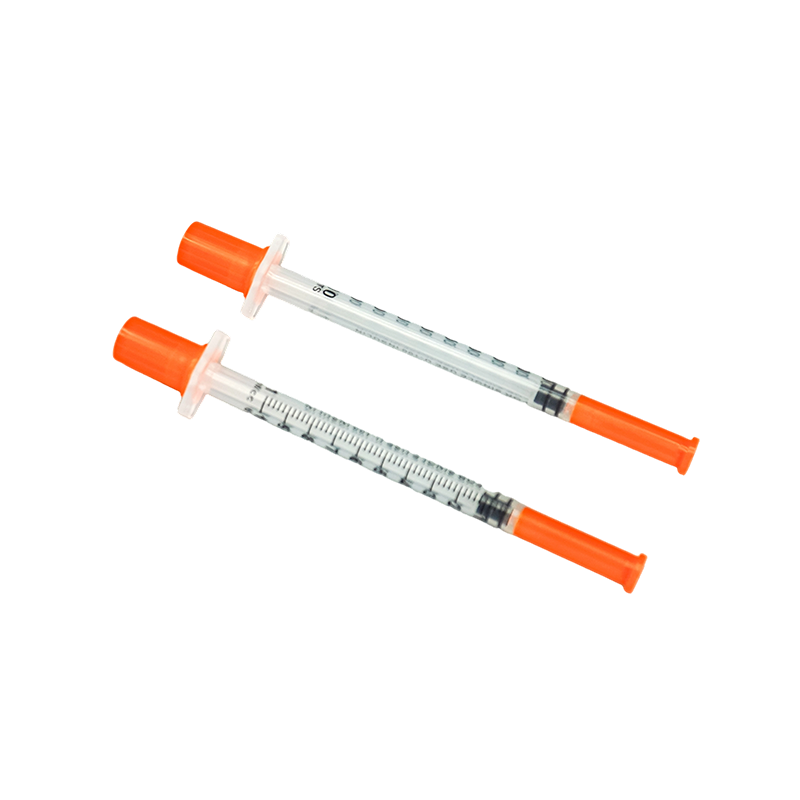 Veterinary Insulin Syringes for Diabetic Dogs and CatsA veterinary-specific fixed-needle syringe with fine gauge and IU graduations, suited to accurate daily insulin dosing for diabetic dogs and cats.View Product →
What If You Are Measuring Something Other Than Insulin?
U-100 barrels are popular far beyond insulin, because 100 divisions make them convenient for any liquid handled in small volumes. Compounded medications and research peptides are the two examples we hear about most.
There is a catch worth repeating: a unit on a syringe is a volume mark, not a measure of drug strength. A figure of 0.01 mL per unit says nothing about milligrams or micrograms. If a vial is labelled 2.5 mg/mL and the target dose is 500 mcg, you convert to 0.2 mL first and only then look for the 20-unit line. Work from the concentration on the label, write the calculation down, and confirm it with the prescriber before drawing anything.
For that kind of work we usually see a standard single-use barrel chosen for clear printing and predictable dead space.
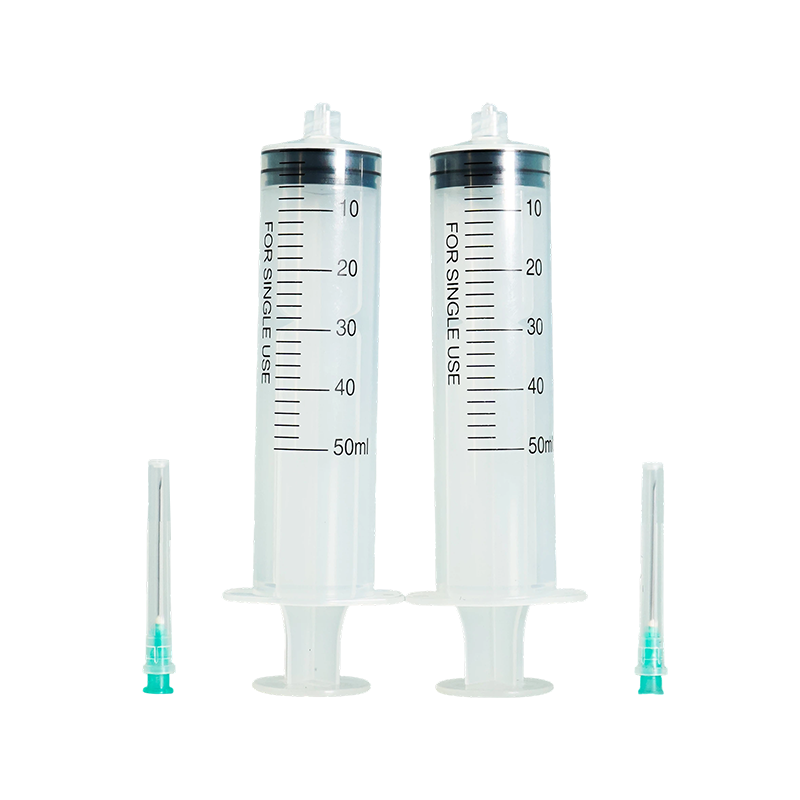 Sterile Single-Use Syringes with Needles, 1-50 mlFor standard single-use workflows, this disposable syringe line offers clear graduations, Luer Lock or Slip, and 1-50 ml capacities.View Product →
Small Habits That Keep a 0.25 mL Draw Accurate
- Read the top edge of the plunger seal, not the top of the liquid, and hold the syringe at eye level.
- Expel air bubbles before the final adjustment; trapped air occupies volume that should hold medication.
- Keep hub dead space in mind, since the liquid retained in the needle hub varies between models.
- Avoid estimating between lines when a smaller barrel would give you a numbered mark.
- Re-check the scale on every new box, because barrels from different production runs are not always printed alike.
If you are also sorting out how much single-use equipment to keep on hand, our note on disposable versus reusable medical consumables walks through the practical trade-offs.
Choosing a Syringe for Small Volumes
For a 0.25 mL dose, capacity works in your favour. A 0.3 mL or 0.5 mL barrel pushes 25 units into the upper half of the scale, where the lines are further apart and a half-line slip represents a smaller proportion of the dose. A 1 mL barrel still does the job, but it compresses the same volume into a quarter of the printed range.
After capacity, look at printing quality, plunger feel and dead space. Needle gauge and length generally follow the clinician's instruction; for subcutaneous use, short fine-gauge needles are the usual choice.
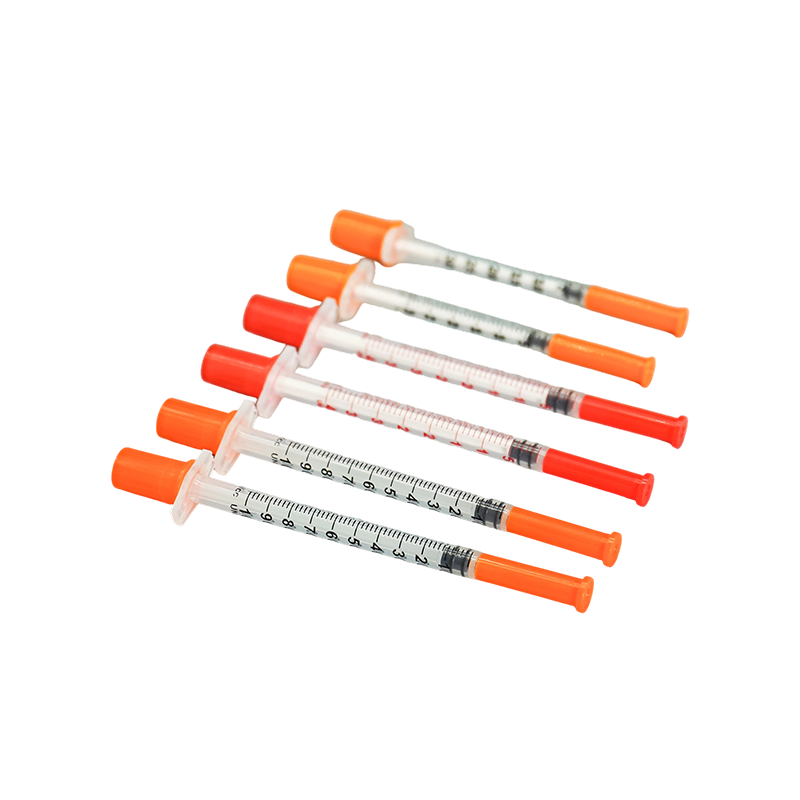 Disposable Insulin Syringes with 40 IU and 100 IU ScalesFixed-needle insulin syringes with high-definition 40 IU or 100 IU markings, fine gauges, and reduced dead space for small-volume diabetes dosing.View Product →
We produce insulin and disposable syringes across a range of barrel sizes, and we are glad to discuss which configuration suits a particular dosing routine, including private-label and OEM work. An overview of how our range fits together is on the medical solution page.
Frequently Asked Questions
Is 0.25 mL always 25 units?
Only on a U-100 syringe. The volume stays the same, but the unit count depends on concentration: 0.25 mL is 10 units on a U-40 barrel and 125 units on a U-500 barrel.
How many mL is 25 units on a 100 unit syringe?
Exactly 0.25 mL, because 1 unit equals 0.01 mL.
Can a 1 mL syringe measure 0.25 mL accurately?
Yes, provided the graduations are fine enough to place the mark confidently. Many users still prefer a 0.3 mL barrel, which gives the same dose more room on the scale.
What does 0.25 mL look like on a 30 unit syringe?
On a 0.3 mL U-100 barrel it reads as 25 units, sitting near the top of the scale, five small lines below the 30 mark.
A Final Word
Small-volume dosing rewards a slow, repeatable routine: confirm the concentration, choose a barrel that shows the dose clearly, read the plunger at eye level, and check the line twice before you inject. Do that consistently and 0.25 mL on a 100 unit syringe is simply the mark labelled 25.
Nothing in this article replaces the dosing instructions given by a qualified healthcare professional. If you are sourcing syringes for a clinic, pharmacy or distribution programme, our team is happy to help with specifications, packaging and documentation at zy01@zymedical.com.
Related Product

Related NEWS