русский
 عربى
 中文简体


Needle Bevel Basics: Angles, Types, and Practical Selection Guide for Clinicians
Content
Needle bevels look like a small detail until a procedure depends on resistance, precision, and patient comfort. The bevel of a needle is the slanted opening at the tip, the part that meets tissue first. Its angle, length, edge quality, and orientation influence how the needle enters, how fluid flows, and how much trauma the surrounding tissue experiences. In our day-to-day work with disposable needles and syringes, we have seen how often this tiny geometry is treated as an afterthought, even though it shapes the entire injection or access experience.
This guide walks through the practical basics: what the bevel is, why it matters, how common designs differ, and what to check when choosing a needle for a clinical, dental, aesthetic, or veterinary workflow. The aim is not to replace product instructions or clinical training, but to make the technical conversation a little clearer.
What the Bevel of a Needle Actually Is
At its simplest, the bevel is created by grinding an angled face at the end of the cannula. That face includes a sharp tip, a heel, and the opening into the lumen. The primary bevel angle is usually described in degrees relative to the needle axis. A smaller angle creates a longer, shallower tip; a larger angle creates a shorter, steeper one. Bevel length is not the same as needle length. Two needles can share the same gauge and length yet behave differently because their tip geometry is different.
The quality of the edge matters as much as the angle on paper. A cleanly ground and polished bevel supports smooth penetration. A rough edge can drag tissue, increase insertion force, and make the procedure feel less predictable. The inner lumen, wall thickness, and surface finish also affect flow and the feel of the needle in use.
In our medical needle range, routine hypodermic options are built around consistent bevel geometry and smooth edges, because those details are noticed at the bedside and in the clinic.
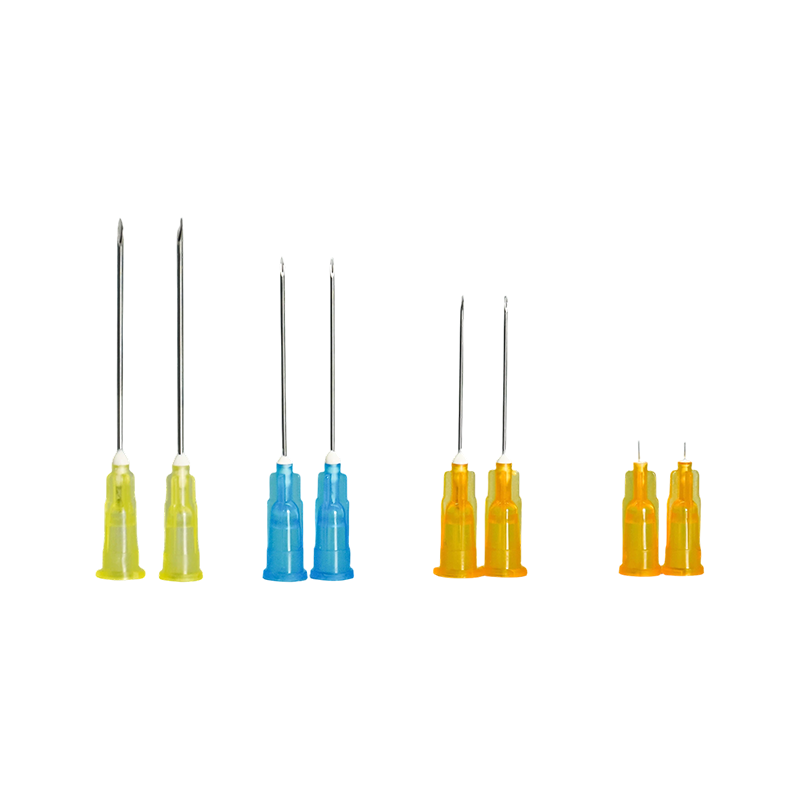 Sterile Single-Use Hypodermic Needle for Routine InjectionsPrecision-ground bevel and smooth stainless steel cannula support controlled penetration for routine subcutaneous, intramuscular injections, and blood sampling in clinical settings.View Product →
Why Bevel Geometry Changes the Procedure
Bevel geometry affects insertion force, tissue separation, fluid flow, and the risk of unnecessary trauma. A well-formed bevel can help the needle enter with less resistance and create a more controlled path. A dull or irregular bevel may increase pain, bruising, or vessel-wall damage, and it can make a familiar technique feel different in the hand.
In phlebotomy, the bevel interacts with vein depth, vessel fragility, needle gauge, and tourniquet technique. A clean bevel and correct orientation support smoother vessel entry, but sample quality also depends on tube handling, order of draw, and prompt processing. In spinal or biopsy procedures, tip design can influence the feel of tissue penetration and the character of the sample. In aesthetic work, fine needles and blunt-tip cannulas serve different purposes, so the bevel should be matched to the technique rather than chosen by gauge alone.
The practical lesson is simple: do not evaluate a needle by gauge and length only. Ask what the tip is designed to do, and whether the bevel suits the tissue it will meet.
Common Needle Bevel Types and Where They Fit
Needle tip designs vary by manufacturer and product family, but several broad categories are useful to know. The table below compares the most common concepts in practical terms. Exact angles and dimensions should always be confirmed on the product specification and instructions for use.
| Tip design | Typical geometry | Common use | Practical note |
|---|---|---|---|
| Standard or regular bevel | Moderate bevel angle with a familiar cutting edge | General injection, infusion, and routine venipuncture | A balanced starting point when no specialty tip is required |
| Short bevel | Steeper, shorter tip | Selected intradermal or specialty procedures | Technique-sensitive; follow the product’s intended use |
| Long bevel | Longer, shallower cutting face | Selected access and phlebotomy applications | Can feel very sharp but may be less forgiving in fragile tissue |
| Pencil-point or atraumatic tip | Rounded or non-cutting tip rather than an open bevel | Selected spinal and specialty procedures | Chosen for tip behavior, not for conventional injection use |
Aesthetic and specialty injectable products often call for a fine, predictable tip, while blunt-tip cannulas are selected when the technique calls for a less cutting approach. The distinction is useful: a needle and a cannula are not interchangeable simply because both reach the same tissue depth.
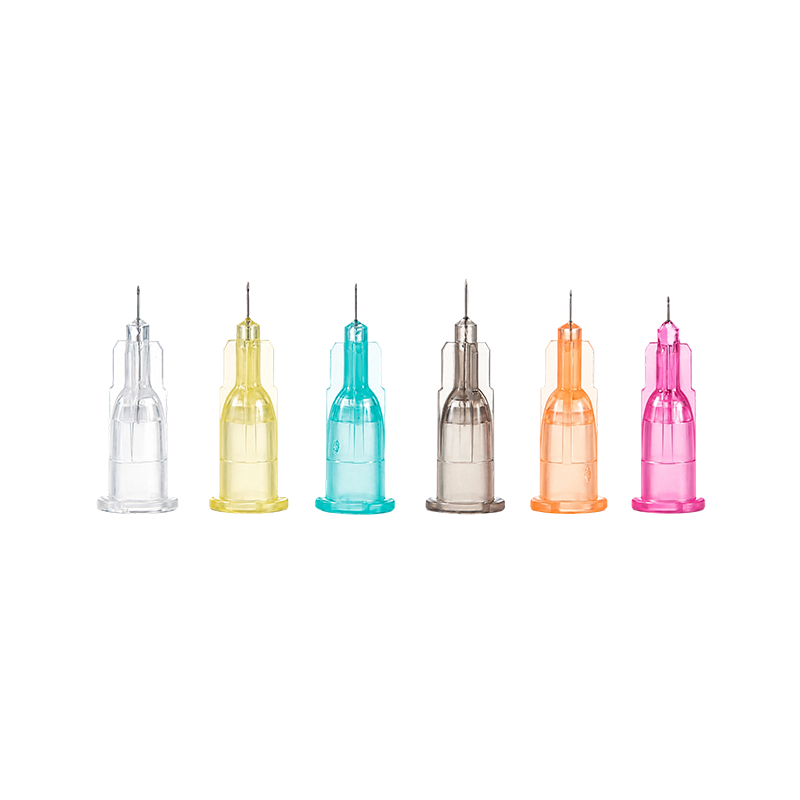 Sterile Fine-Gauge Injection Needle for Medical AestheticsUltra-fine 30G–34G micro-needle with short lengths and precision-ground tip supports controlled intradermal placement in sensitive facial and body aesthetic procedures.View Product →
Bevel Up, Bevel Down, and Technique
“Bevel up” is the familiar orientation in many injections and venipuncture procedures. The slant opening faces upward, the sharp tip leads, and the opening is directed away from the far vessel wall as the needle advances. This orientation presents the cutting edge in a controlled way and supports a smooth entry when the angle and depth are correct.
Bevel-down techniques exist in specific clinical protocols, but they are not a universal alternative. Orientation changes how the tip meets tissue, and it should be taught, practiced, and governed by local policy. Ultrasound guidance, skin tension, insertion angle, and patient anatomy all influence the result. What matters most is consistency: the bevel should be oriented deliberately, not by habit alone.
Safety-engineered needles add another variable. The safety mechanism should not interfere with bevel orientation, flow, or activation after use. A device that feels awkward can undermine technique even when the tip geometry is sound.
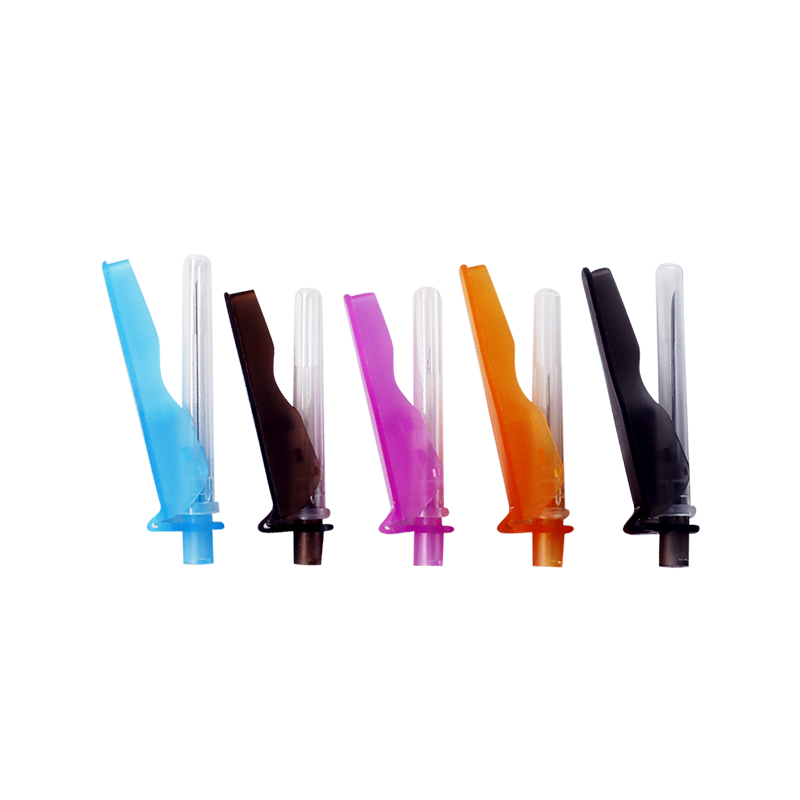 Single-Use Safety Needle with Integrated Tip GuardIntegrated safety mechanism shields the needle tip after withdrawal, supporting injection and blood collection while helping reduce post-use needlestick exposure in high-risk clinical departments.View Product →
How to Choose the Right Bevel
Selection starts with the procedure, not the catalogue. Use this practical sequence:
- Confirm the intended tissue and procedure: skin, vein, dental tissue, aesthetic plane, or veterinary use.
- Check gauge, length, wall type, and bevel design together; one dimension does not tell the whole story.
- Consider patient factors such as vessel fragility, tissue depth, age, and prior access difficulties.
- Review the safety mechanism, sharps handling, and waste-disposal requirements.
- Verify the supplier’s specifications, instructions for use, and quality documentation.
When a workflow spans several departments, it helps to map products to the actual clinical scenario rather than buying by habit. Our medical solution overview is one place to compare routine injection, infusion, and needle-based workflows.
Review the medical solution overview if you are aligning needle choices with a broader clinical supply plan.
Manufacturing Details That Affect the Bevel
A good bevel is made, not simply inspected in. Grinding, deburring, cleaning, polishing, and inspection all shape the final edge. Tiny burrs or inconsistent primary bevel angles can create variation that a user feels immediately. That is why process control, edge examination, and lot traceability matter in needle production.
In our own manufacturing environment, the practical focus is on repeatability: stable grinding parameters, clean handling, and quality checks that match the product’s intended use. Our quality system references ISO 13485 and EU MDR requirements for applicable medical-device activities, with FDA establishment registration and device listing for the U.S. market. Regulatory references should always be read within the applicable product scope.
Buyers should also ask how the supplier controls change. A new grinding wheel, a revised polishing step, or a different cannula lot can influence the feel of the tip. Good suppliers define those changes, verify them, and keep the specification connected to the finished product.
For teams comparing suppliers, our guide on choosing a reliable medical consumables supplier covers documentation, consistency, and communication points that are easy to overlook.
Final Thoughts
The bevel of a needle is a small feature with a large effect on how a procedure feels and performs. Angle, length, edge quality, orientation, and safety design all work together. The best choice is the one that matches the tissue, the technique, and the product’s validated intended use, not simply the needle that happens to be on the shelf.
When in doubt, ask for the specification, review the instructions, and test the device in the context where it will be used. That habit, more than any single measurement, keeps needle selection practical and patient-focused.
Related Product
Related NEWS